
The Power of Silence: A Journey Into Japanese ZEN (Even If You Can’t Fly to Japan)
Japanese ZEN 禅: 5 Powerful Insights From Temple Life
There’s a particular kind of silence you find inside a Japanese temple. It’s not the absence of sound — it’s the presence of something deeper. A fullness. A returning.
I first encountered this silence over fifteen years ago, when I began studying Japanese ZEN 禅 and the Japanese language during my undergraduate years. What started as curiosity quickly became a devotion. I travelled to Japan many times, sitting with monks, walking temple grounds at dawn, learning to listen with my whole body.
My most transformative experience was at Hōkō-ji 方広寺 in Okuyama 奥山, Shizuoka Prefecture, Japan — a remote mountain temple where silence wasn’t just practised during meditation, it was lived. Every step, every meal, every breath was an act of presence.
That experience never left me. And it shaped everything I now share through my integrative wellness practice.
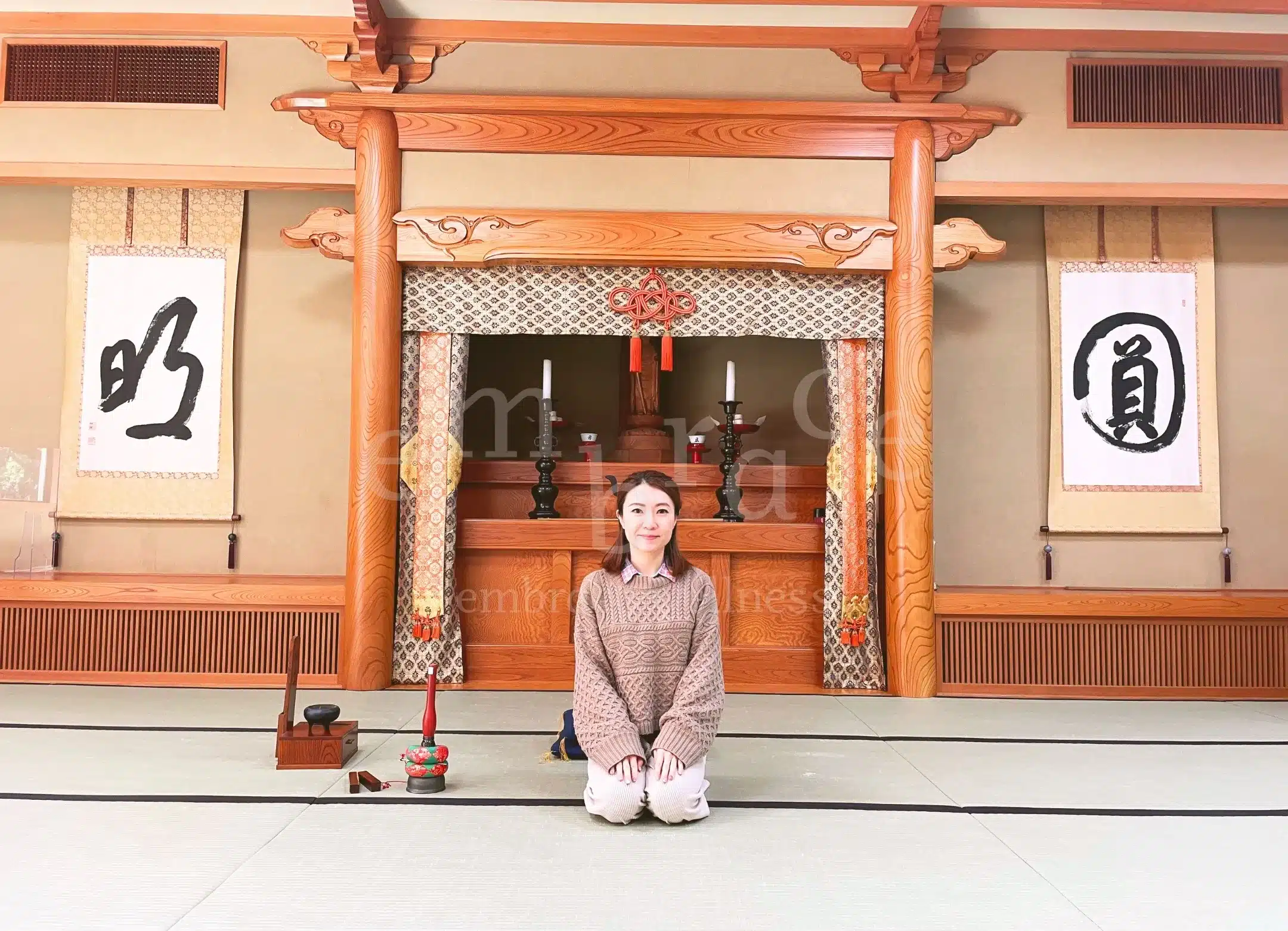
A quiet moment inside Hōkō-ji 方広寺 in Japan, where I experienced the stillness and discipline of Japanese temple ZEN practice.
I remember, during zazen 坐禅 seated meditation, a monk striking my shoulders with the keisaku 警策, the flat wooden stick used in traditional temple practice. The sound was sharp, the contact strong and deliberate, but it was not painful. It was intense, grounding, and deeply memorable. In that moment, posture, presence, and practice were no longer abstract concepts, but something I felt directly in my body.
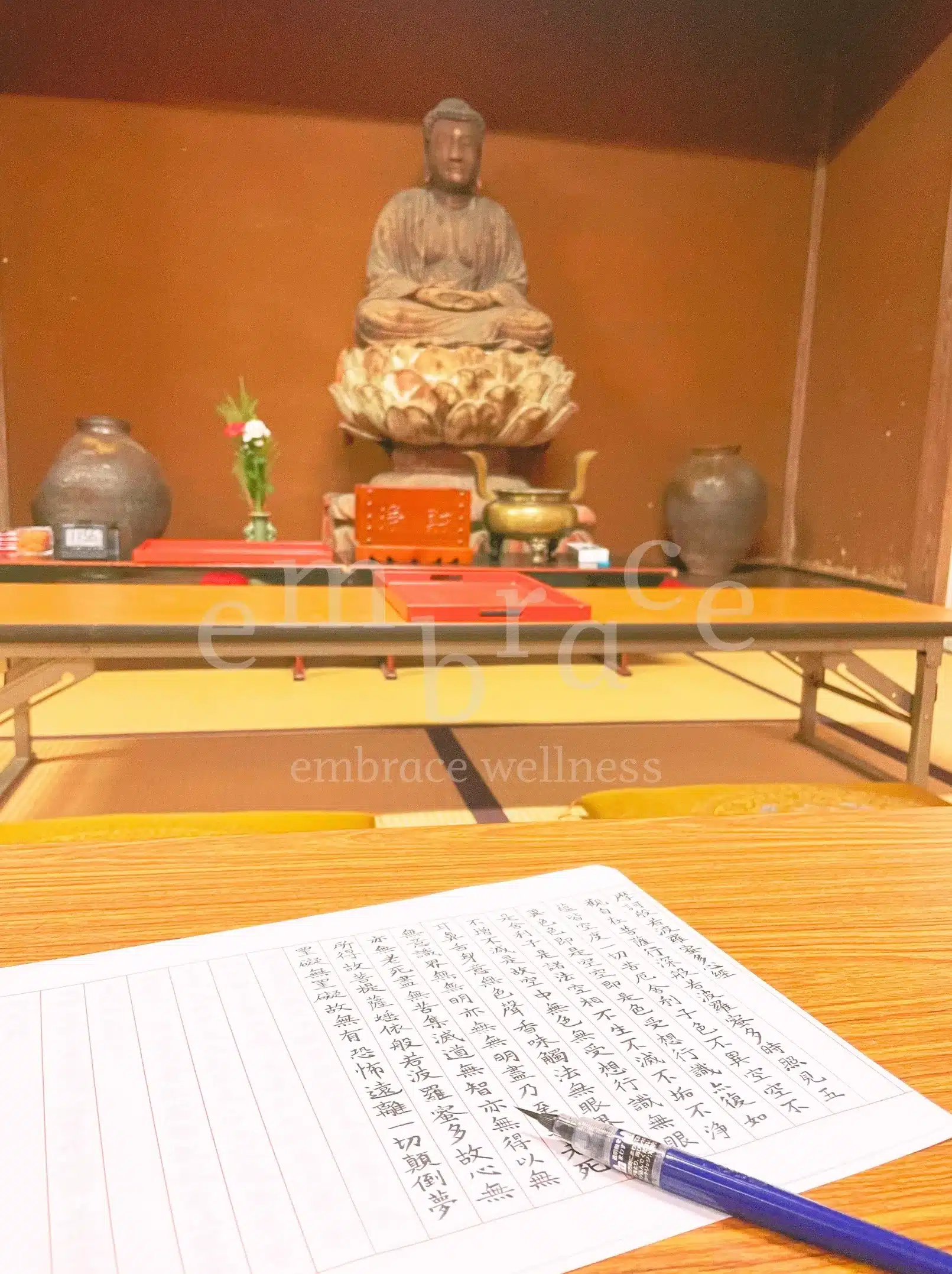
Practising Shakyō (写経) sutra copying during my temple stay at 方広寺 (Hōkō-ji) was a meaningful part of my Japanese ZEN and meditation experience.
Seijaku 静寂 — The Art of Stillness in Noise
In Japanese ZEN, there is a concept called Seijaku 静寂, which is often translated as “stillness,” but it means something richer than that.
It’s the tranquillity you cultivate within activity. The calm eye inside the storm of daily life.
I understood Seijaku 静寂 not from a book, but from sweeping the temple courtyard one autumn morning. Leaves kept falling. I kept sweeping. There was no frustration, no finish line — just the rhythm of bristles against stone, the cool air, the sound of my own breath settling.
We live in a world that rewards busyness. Notifications. Noise. Constant doing. Seijaku 静寂 invites us to ask: what if stillness isn’t something you schedule, but something you carry with you?
This is what drew me deeper into Japanese ZEN.
Not escape. But a way of being fully here, whether you’re in a mountain temple or standing in a supermarket queue.
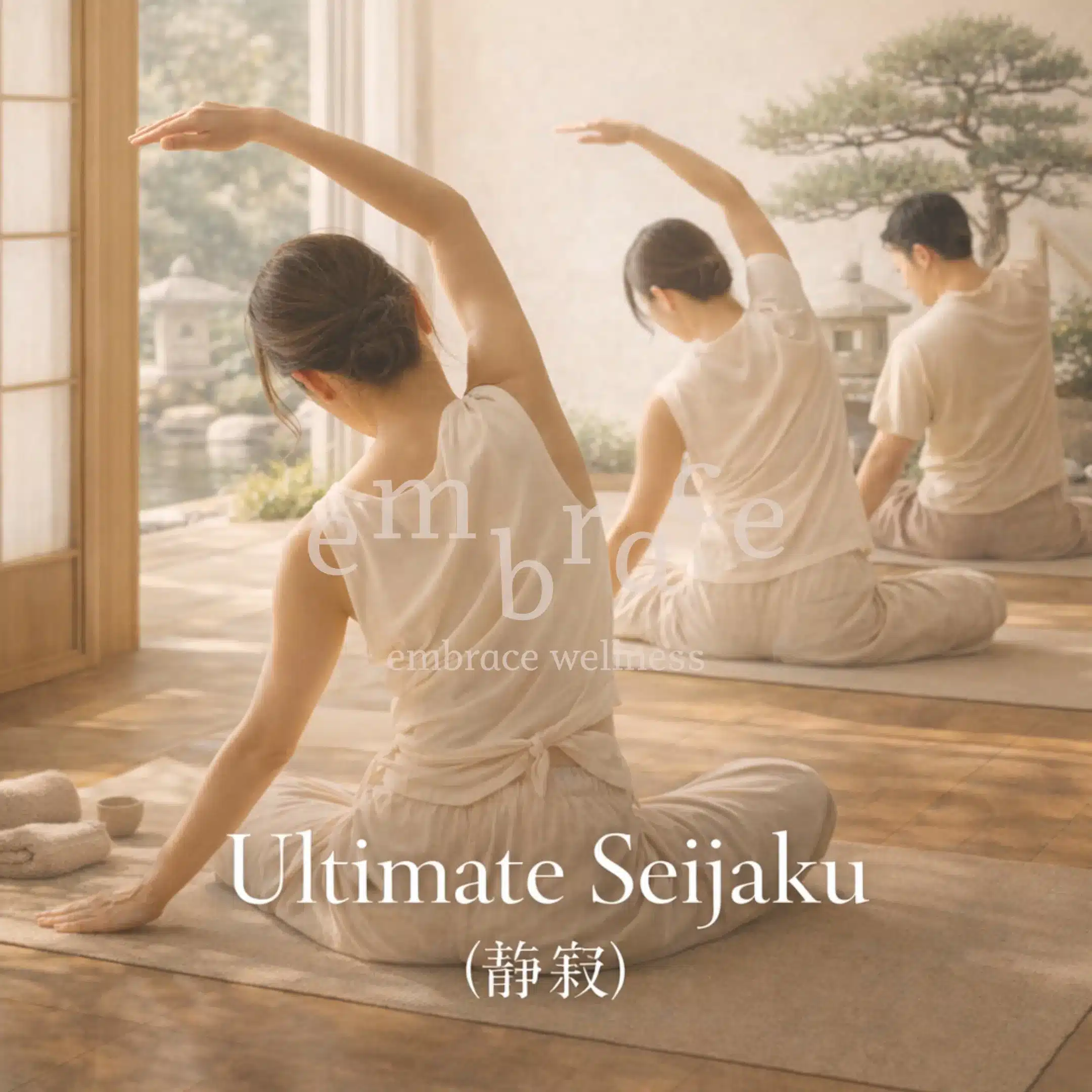
Seijaku 静寂 is not the absence of movement, but the quiet presence within it.
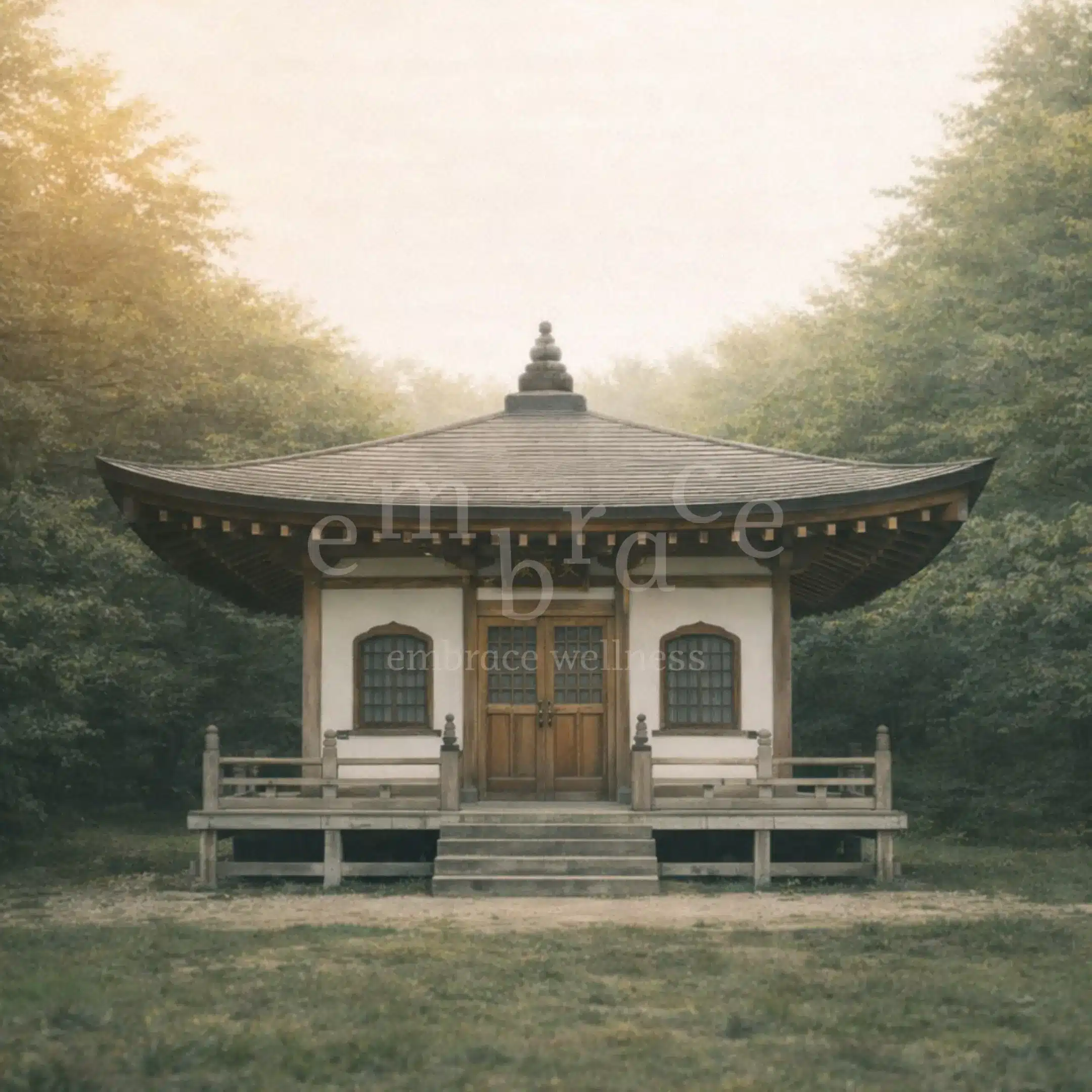
The Japanese Temple and Japanese ZEN Garden at The Donnington Grove Hotel in Newbury, Berkshire — a peaceful setting for mindfulness and meditation.
Zazen 坐禅 — Sitting With What Is
At the heart of Japanese ZEN is Zazen 坐禅 seated meditation.
But unlike many modern mindfulness techniques, Zazen 坐禅 isn’t about achieving a particular state. We’re not trying to relax. We’re not trying to empty your mind.
We’re simply sitting. Breathing. Being with whatever arises — without fixing, without fleeing.
In the Zendo 禅堂, the meditation hall at Hōkō-ji 方広寺, we sat facing the wall.
No guided audio. No gentle music. Just the sound of other bodies breathing, the occasional crack of the keisaku 警策 (the “encouragement stick”) on a fellow sitter’s shoulders, and the bell that marked the beginning and end of each round.
Forty minutes felt like five. Or like five hours. Both were fine. That was the teaching.
As someone trained in both Eastern contemplative traditions and Western modalities such as hypnotherapy and somatic coaching, I find Zazen 坐禅 remarkable in its simplicity. It requires nothing but your willingness to stay even when your knees ache, even when your mind screams for distraction.
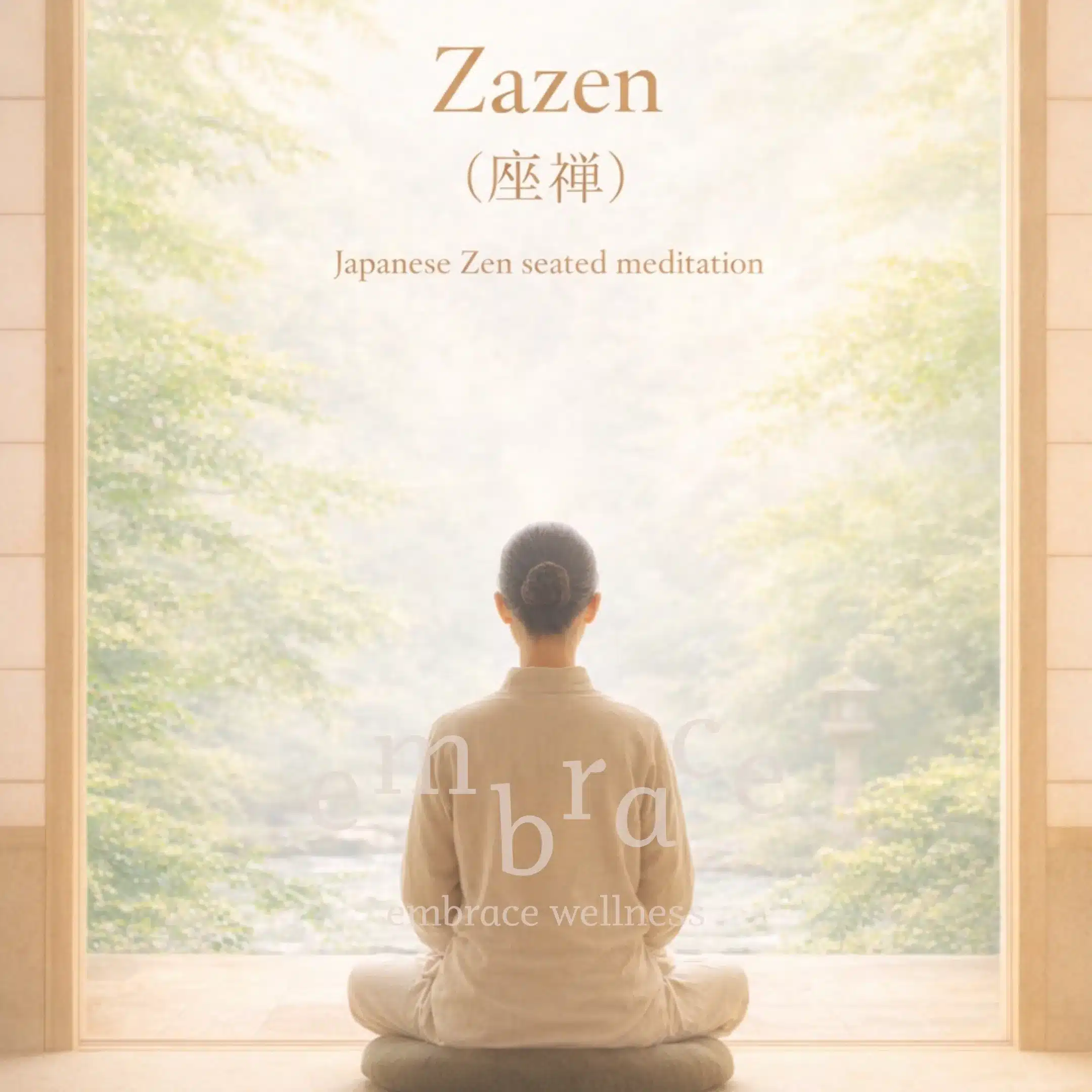
Zazen 坐禅 seated meditation practised with Wellness Coach Manlee W at The Japanese Temple and Japanese ZEN Garden at The Donnington Grove Hotel in Newbury, Berkshire.
Kinhin 経行 — Walking as Meditation
Then there is Kinhin 経行 — walking meditation in Japanese ZEN.
During each of my visits to Japanese temples, we practised Kinhin 経行 in between rounds of Zazen 坐禅, moving in a slow, clockwise circle around the Zendo 禅堂, the meditation hall. One half-step per breath. Hands held in shashu 叉手, where one fist enclosed by the other hand and held gently against the chest.
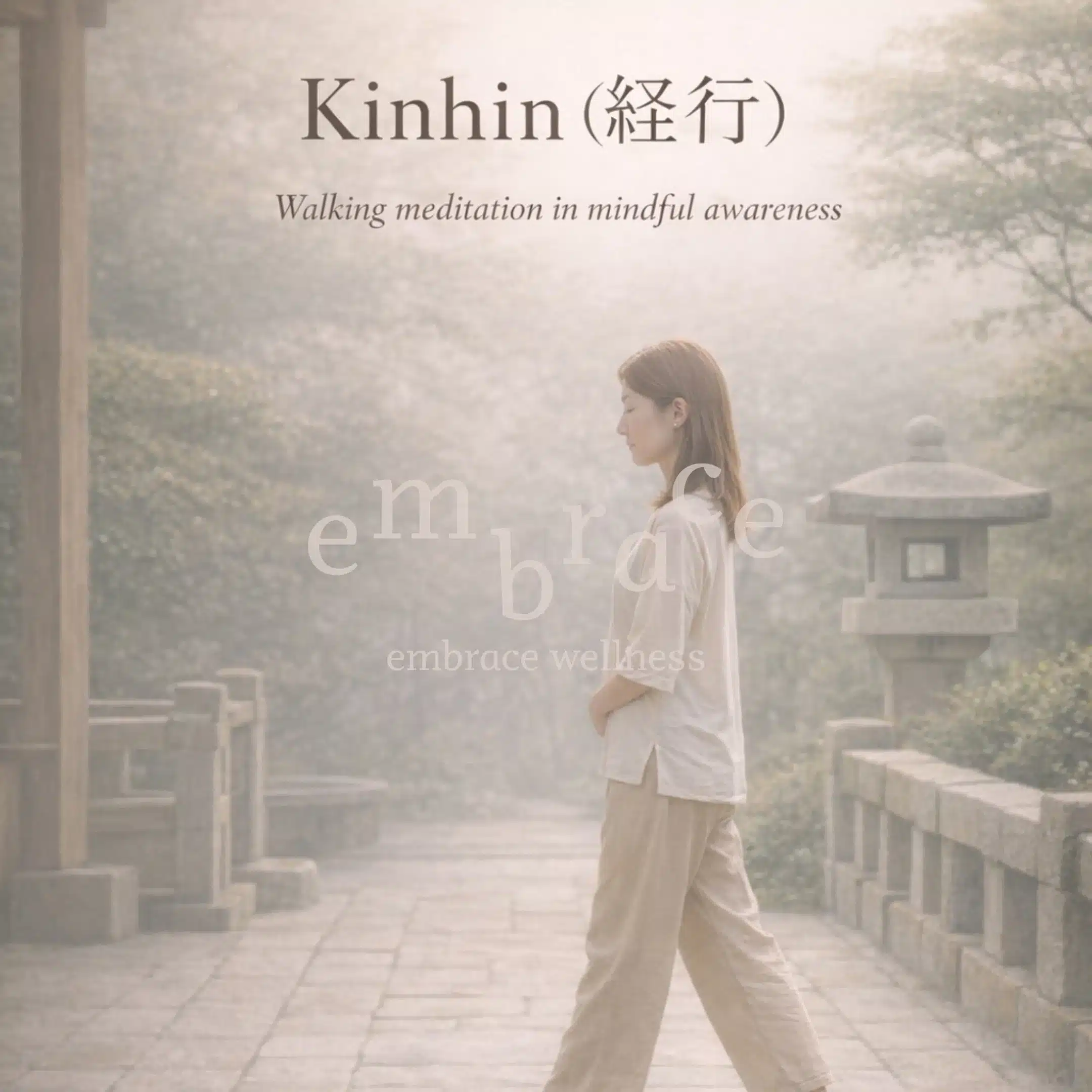
Kinhin 経行, the Japanese Zen practice of walking meditation in mindful awareness, where each step becomes part of the practice.
I love Kinhin 経行 because it bridges the cushion and the world. The monks taught me that awakening means nothing if it doesn’t enter your legs, your steps, your everyday movement.
Shakyō 写経 — Sutra Copying as Moving Meditation
Shakyō 写経 sutra copying has long been one of the practices closest to my heart.
I have practised it not only in Japanese temples, but in temples across Asia — in Hong Kong, Taiwan, Mainland China, and beyond.
Shakyō 写経 sutra copying is also something I regularly practice at home.
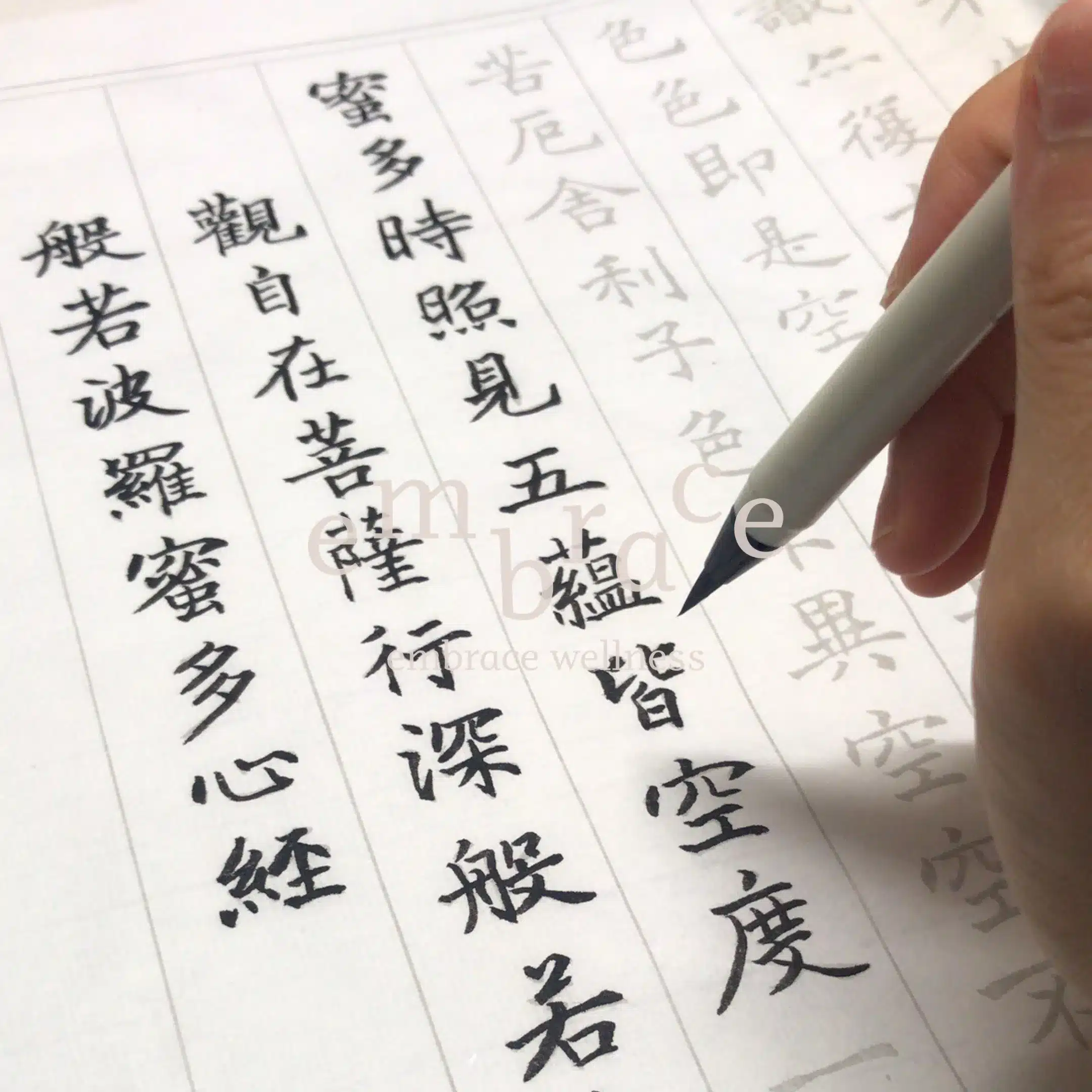
My regular Shakyō 写経 Sutra Copying practice at home — a meditative ritual of copying sutras, one mindful character at a time, in a gentle rhythm of mindfulness, inner stillness, and Zen.
Every time when I go for a temple visit, sitting down to copy the sutras felt instantly familiar. One character at a time, the breath softened and the mind grew quiet. Like shodō 書道, it became a meditation through the hand.
Shakyō 写経 sutra copying reminds me that meditation does not always mean sitting still. Sometimes, it is simply ink, paper, and full presence.
Itadakimasu いただきます — Mindful Eating With Gratitude
In Japanese ZEN, meals are part of the practice.
There is no talking. No phones. No choice about what is served. We receive the meal with gratitude and eat with care.
At the end, we clean the bowls with hot water and a little pickled radish, then drink the water. Nothing is wasted.
Each meal becomes a quiet meditation on gratitude, presence, and impermanence.
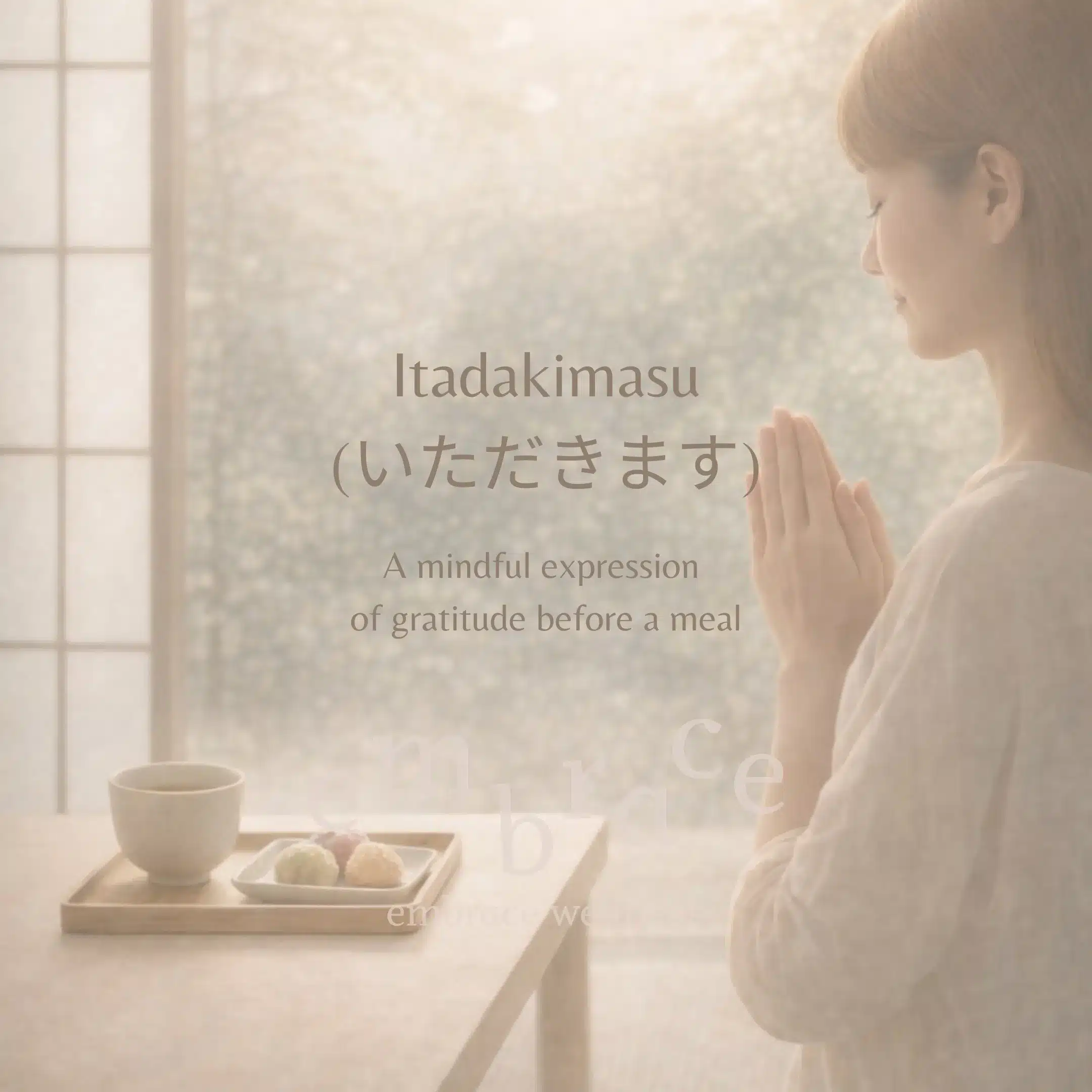
Before a meal in Japanese mindful eating practice, Itadakimasu いただきます — “I humbly receive.” invites a quiet moment of gratitude, presence, and humble receiving.
For me, this also reflects the Yamas, the ethical restraints within the Eight Limbs of Yoga, especially ahimsa, aparigraha, and saucha.
It is one of the ways I bring the timeless principles of the Eight Limbs of Yoga into everyday practice. As I explore in Yoga Philosophy in Modern Life, real practice begins in the small, conscious rituals of daily life.
It is a practice I’ve been carrying into my personal life and my own wellness coaching offerings, because the way we eat often reflects the way we live.
Entering the Quiet Wisdom of Japanese Zen — Japanese ZEN Summer Retreat in Berkshire
Japanese ZEN 禅 continues to remind me that the deepest practices are often the simplest: sitting, walking, writing, eating, and breathing.
In a world of constant noise, these quiet rituals offer a way back to presence, steadiness, and inner stillness.
They have shaped not only my personal path, but also the heart of the wellness offerings I now share with others — an east-meet-west approach grounded in mindfulness, meditation, and compassionate guidance.
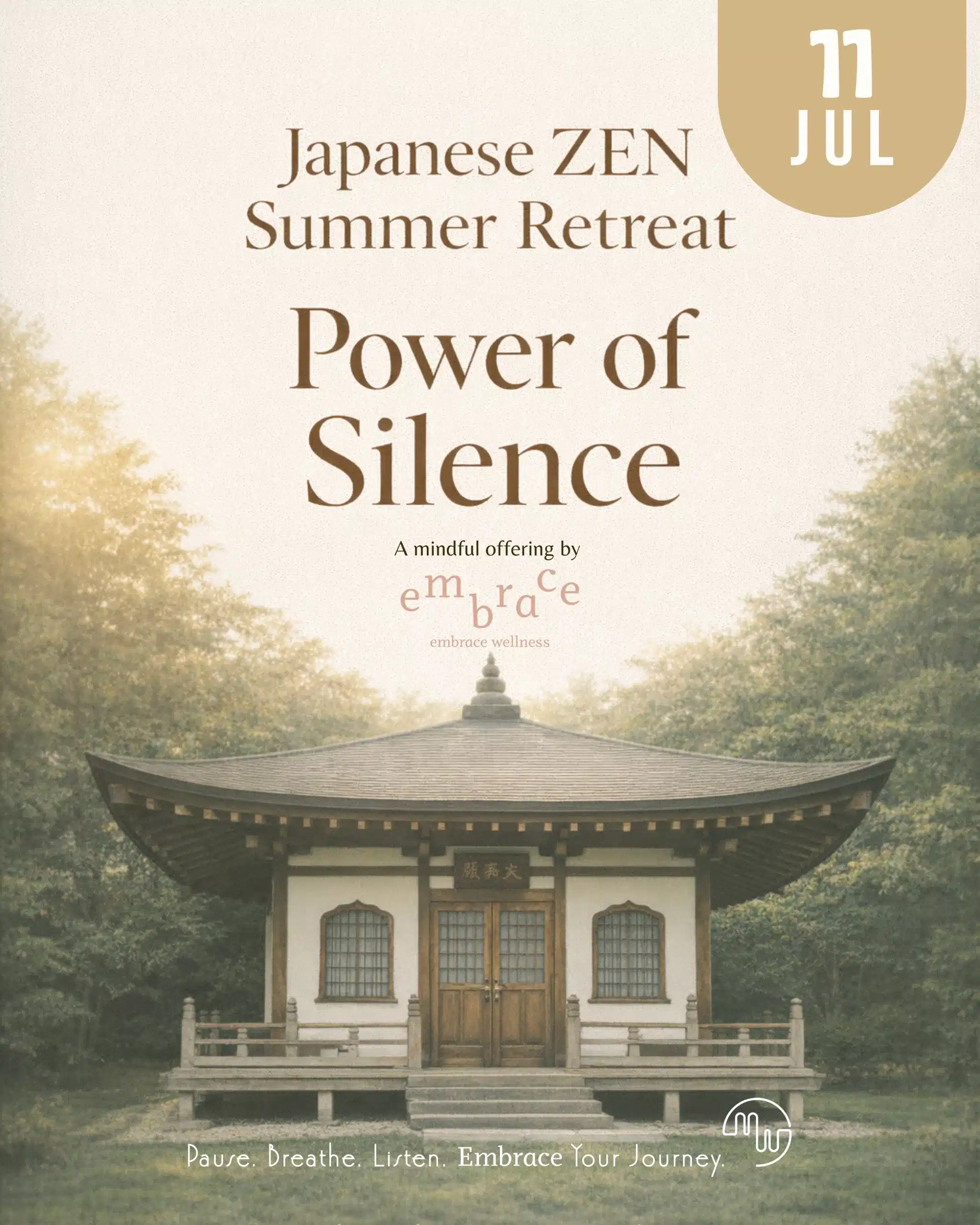
Japanese Zen Summer Retreat — Power of Silence, an authentic Japanese Zen experience in Newbury, Berkshire by Embrace Wellness by Manlee W.
If you feel drawn to experience Japanese ZEN 禅 for yourself, I would be delighted to welcome you to my Japanese ZEN Summer Retreat on 11 July 2026 (Sat) at The Japanese Temple and Japanese ZEN Garden at The Donnington Grove Hotel in Newbury, Berkshire — a gentle invitation to pause, breathe, and immerse yourself in the essence of Japanese ZEN 禅, all without flying to Japan.
With Warmth & Love,
Manlee
Share this post on your channel
Follow us
Latest articles
Book A class today!
Our NEW Regular Yoga Classes are perfect for everyone, whether you’re a curious beginner or looking to reignite your practice! We offer a variety of classes featuring different styles and intensities. In small group settings with clear guidance from Manlee, you’ll receive supportive attention to enhance your overall experience.

